

Details
Graph Neural Networks (GNNs) have become a cornerstone for the application of deep learning to relational data on complex networks. However, we increasingly have access to time-resolved data on temporal graphs that not only capture which nodes are connected to each other, but also when and in which temporal order those connections occur. A number of works have generalized GNNs to temporal graphs, but our understanding for the expressivity of these models remains limited.
Addressing this gap, we propose a novel notion of temporal graph isomorphism and develop a temporal generalization of the Weisfeiler-Leman algorithm to heuristically distinguish non-isomorphic temporal graphs. Building on this foundation, we derive a novel message passing scheme for temporal graph neural networks that operates on the event graph representation of temporal graphs. Our approach accounts for temporal-topological patterns that unfold via causal walks, i.e. temporally ordered sequences of connections by which nodes can causally influence each other over time.
Bio
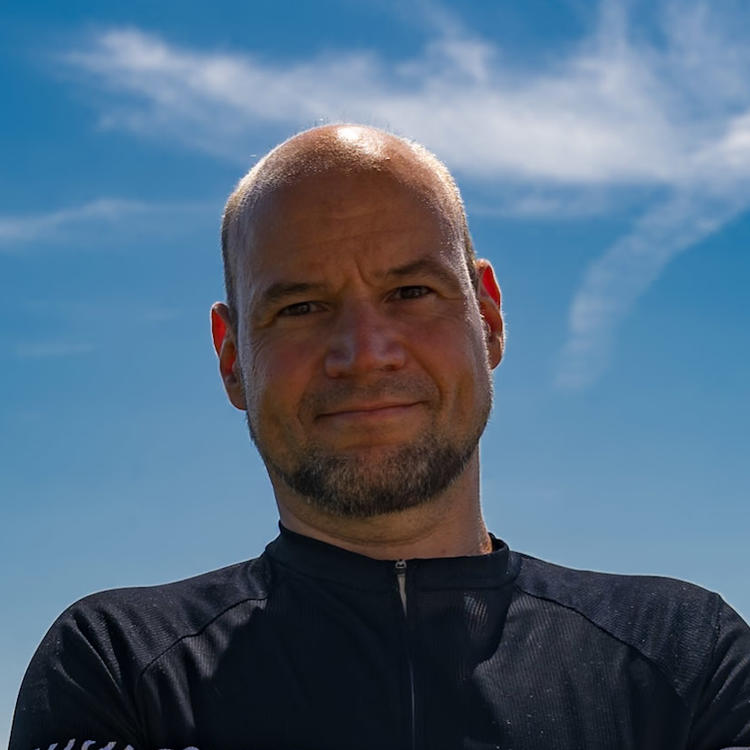
Ingo Scholtes is a Full Professor for Machine Learning in Complex Networks at University of Wuerzburg, Germany and co-director of the Center for Artificial intelligence and Data Science (CAIDAS). He has a background in computer science and mathematics and obtained his doctorate degree from University of Trier, Germany. He was a postdoctoral researcher at the interdisciplinary Chair of Systems Design at ETH Zurich from 2011 till 2016. In 2018 he was appointed as SNSF Professor for Data Analytics at University of Zurich. In 2019 he was appointed Full Professor at University of Wuppertal. Since 2021 he holds the CAIDAS-Chair of Machine Learning for Complex Networks at University of Wuerzburg.
In 2014 he was awarded a Junior-Fellowship from the German Informatics Society. In 2018 I was awarded a CHF 1.5 Mio SNSF Professorship Grant by the Swiss National Science Foundation.